Quartz vs Granite Countertops: Which Is Better for Your Kitchen?
Quartz and granite can both suit a well-planned kitchen. The better choice depends on the slab you select, the care you will actually provide and the way the countertop fits the room. Compare complete installed options and maintenance instructions instead of choosing from a small sample or a material label alone.

Quick Answer: Quartz vs Granite Countertops
Engineered quartz offers manufactured designs and typically does not require sealing. Granite is natural stone with slab-to-slab variation; sealing needs depend on the particular stone and treatment. Neither material is damage-proof, and both deserve a clear care plan.
| Factor | Engineered quartz | Granite |
|---|---|---|
| Appearance | Manufactured colors and patterns | Natural variation in each slab |
| Routine care | Follow the selected brand's instructions | Use care appropriate to the stone and finish |
| Sealing | Typically unnecessary | May be recommended; not universal |
| Heat | Protect from direct and sustained heat | Use trivets despite natural heat tolerance |
| Damage | Edges and surfaces can chip or scratch | Edges and surfaces can chip or scratch |
| Cost | Depends on product and fabrication | Depends on slab and fabrication |
| Resale | No guaranteed material-specific return | No guaranteed material-specific return |
Think about frequent cooking, homework at the island, spills, pets reaching surfaces and entertaining. Choose the option whose appearance and care requirements fit that routine.
What Is Quartz?
Quartz countertops are engineered surfaces, rather than slabs cut directly from a quarry. Products generally combine mineral material with binders and pigments, although the formulation varies by brand and product. Review the specification for the surface you are buying.
Manufactured patterns can make it easier to coordinate several countertop sections, but a small sample does not show the entire design. Ask to see the full slab or a representative large image, especially for bold veining. Discuss how the pattern will run across seams and around an island.
Cambria's care guidance, for example, says its surfaces need no sealing and recommends simple routine cleaning. It also advises protection from hot cookware and heat-producing appliances. Check the instructions for your chosen brand rather than assuming every quartz product has identical requirements.
A practical question is where hot items will land. Plan a durable trivet or protected landing area near the oven before deciding that maintenance will be effortless.
What Is Granite?
Granite is natural stone, with variation in mineral appearance, movement and color. That character is a reason to view and approve the actual slab. Two pieces sold under a similar commercial name can look different, especially across a large island.
The Natural Stone Institute explains that sealing can improve stain resistance but does not make stone stain-proof; some stones do not need it. Ask the supplier whether your slab should be sealed and which product and maintenance interval apply. Avoid treating annual resealing as a rule for every granite countertop.
The finish also affects how the surface looks in use. Compare polished and other available finishes under lighting similar to your kitchen, and ask how marks, spills and routine cleaning should be handled.
Natural heat tolerance should not be treated as permission to place hot pans anywhere. Protect the surface and follow the fabricator's care instructions, including any guidance related to treatments, seams and edges.
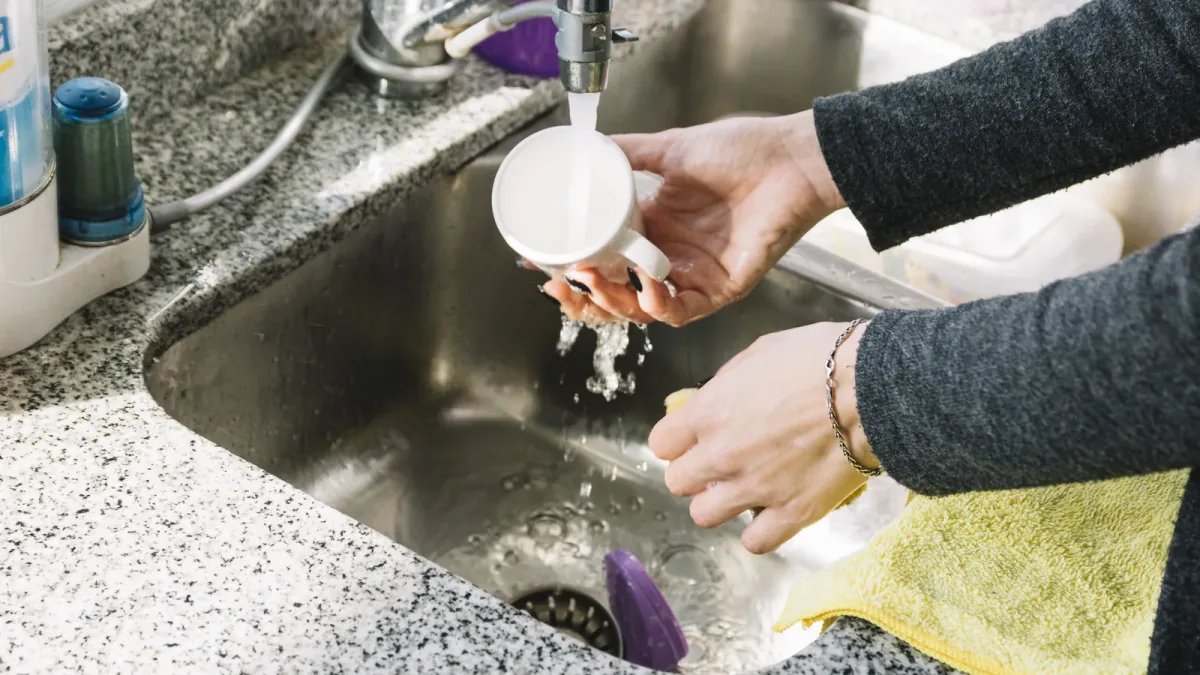
Comparing Quartz and Granite in Real Kitchens
Durability and cleaning
Use cutting boards and avoid striking exposed edges with cookware. Choose cleaning products approved for the specific surface rather than experimenting with abrasive pads or aggressive chemicals. A household that wants a simple routine should read the maintenance sheet before purchasing, not after installation.
Installed cost
Compare the same dimensions and scope. Ask whether each proposal includes templating, material, edge treatment, sink and cooktop cutouts, support, delivery, installation and removal. Waterfall ends, elaborate edges and difficult access can change the total. A slab price alone is not a reliable comparison.
Design and resale appeal
Look at the countertop beside the cabinet finish, backsplash and floor. A dramatic stone may deserve a quieter backsplash; a subtle surface can leave room for stronger cabinet color. View samples in daylight and under the planned electric lighting.
Choose the complete room rather than predicting a resale premium from one material. If a sale is approaching, ask a local real estate professional whether the proposed upgrade fits the home's price range and likely buyers. Do not assume one countertop will pay for itself.
Which Countertop Should You Choose?
Start with quartz if you value a manufactured design and a care routine that usually avoids sealing. Start with granite if the individuality of a natural slab matters to you and you are comfortable following stone-specific care instructions. Then compare actual products: the best choice cannot be made from these categories alone.
- Review the full slab and proposed seam layout.
- Confirm how the sink, faucet and appliance cutouts will be coordinated.
- Ask whether existing cabinets can support the proposed installation.
- Read the care instructions and written product terms.
- Get the complete installed price before approving the selection.
Custom Kitchen & Bathroom Remodeling can help you discuss countertops as part of the whole room. Explore our kitchen remodeling services or request a consultation to compare surfaces alongside your cabinet, flooring and lighting plans.
Frequently asked questions
Is quartz better than granite for kitchen countertops?
Neither is universally better. Compare the actual product, appearance, installed scope and care requirements. Quartz often suits a simple maintenance routine; granite appeals to homeowners who value natural variation.
Does granite need to be sealed?
Some granite benefits from sealing, while other slabs do not require it. Ask the supplier about the specific stone and treatment. Sealing improves resistance to staining but does not make a countertop stain-proof.
Which countertop is easier to maintain?
Quartz often avoids the need for sealing, but both surfaces need appropriate cleaning and protection. Read the specific manufacturer or supplier instructions and choose a routine you can maintain.
Which countertop adds more home value?
There is no dependable universal premium for quartz over granite or vice versa. Condition, appearance and the finished kitchen’s fit with the local market matter more than a material-only prediction.